Wednesday, November 3, 2010

idea entry: week 10: november 04

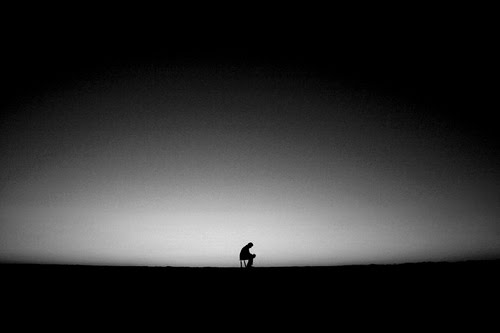
word of the week: DIVIDED

quotes:

Definition of divided

1. a : separated into parts or pieces b of a leaf : cut into distinct parts by incisions extending to the base or to the midrib c : having a barrier (as a guardrail) to separate lanes of traffic going in opposite directions divided highway>

2. a : disagreeing with each other : disunited b : directed or moved toward conflicting interests, states, or objects <divided loyalties>

3. : separated by distance divided — James Joyce>


"Plato used a similar metaphor in which the self (or soul) is a chariot, and the calm, rational part of the mind holds the reins. Plato’s charioteer had to control two horses:

The horse that is on the right, or nobler, side is upright in frame and well jointed, with a high neck and a regal nose; . . . he is a lover of honor with modesty and self-control; companion to true glory, he needs no whip,
and is guided by verbal commands alone. The other horse is a crooked great jumble of limbs . . . companion to wild boasts and indecency, he is shaggy around the ears—deaf as a post—and just barely yields to horsewhip
and goad combined."

"But as the twentieth century wore on, cars replaced horses, and technology gave people ever more control over their physical worlds. When people looked for metaphors, they saw the mind as the driver of a car, or as a program running on a computer. It became possible to forget all about Freud’s unconscious, and just study the mechanisms of thinking and decision making. That’s what social scientists did in the last third of the century:
Social psychologists created “information processing” theories to explain everything from prejudice to friendship. Economists created “rational choice” models to explain why people do what they do."

"The Roman poet Ovid captured my situation perfectly. In Metamorphoses, Medea is torn between her love for Jason and her duty to her father. She laments: I am dragged along by a strange new force. Desire and reason are pulling in different directions. I see the right way and approve it, but follow the wrong."

annotated source:
"To understand most important ideas in psychology, you need to understand how the mind is divided into parts that sometimes conflict. We assume that there is one person in each body, but in some ways we are each more like a committee whose members have been thrown together to do a job, but who often find themselves working at cross purposes. Our minds are divided in four ways. The fourth is the most important, for it corresponds most closely to the rider and the elephant; but the first three also contribute to our experiences of temptation, weakness, and internal conflict."

"We sometimes say that the body has a mind of its own, but the French philosopher Michel de Montaigne went a step further and suggested that each part of the body has its own emotions and its own agenda. Montaigne was most fascinated by the independence of the penis:

We are right to note the license and disobedience of this member which thrusts itself forward so inopportunely when we do not want it to, and which so inopportunely lets us down when we most need it. It imperiously contests for authority with our will. Montaigne also noted the ways in which our facial expressions betray our secret thoughts; our hair stands on end; our hearts race; our tongues fail to speak; and our bowels and anal sphincters undergo “dilations and contractions proper to [themselves], independent of our wishes or even opposed to them.” Some of these effects, we now know, are caused by the autonomic nervous system—the network of nerves that controls the organs and glands of our bodies, a network that is completely independent of voluntary or intentional control. But the last item on Montaigne’s list—the bowels—reflects the operation of a second brain. Our intestines are lined by a vast network of more than 100 million neurons; these handle all the
computations needed to run the chemical refinery that processes and extracts nutrients from food. This gut brain is like a regional administrative center that handles stuff the head brain does not need to bother with. You
might expect, then, that this gut brain takes its orders from the head brain and does as it is told. But the gut brain possesses a high degree of autonomy, and it continues to function well even if the vagus nerve, which connects
the two brains together, is severed."

"
The mind is divided in many ways, but the division that really matters is between conscious/reasoned processes and automatic/implicit processes. These two parts are like a rider on the back of an elephant. The rider’s inability to control the elephant by force explains many puzzles about our mental life, particularly why we have such trouble with weakness of will. Learning how to train the elephant is the secret of self-improvement."

[Haidt, Jonathan. The Happiness Hypothesis: Finding Modern Truth in Ancient Wisdom. New York: Basic, 2006. Print.]
I feel that we are unable to truly be where we want to be and do what we want and let our mind and body be free because we are so divided in so many ways. Everything that makes us are conflicted with one another. We can divide the human self into two parts; the mind and the body. But then from those two categories we are divided and sub-divided into a million and one other categories. Perhaps this is why it is rare for us to be completely content with our physical location and also be mentally present in the same location and not else where.

summary:
I believe some of the reading for this week, helped answered some concern from last week. I thought of the body as a vehicle in which the mind drives. I also wondered why we are still unhappy since we have the position behind the steering wheel, why we are incapable of driving ourselves to the place we wish to be so that our thoughts and our body can be on the same way. I realize after reading this that it is much more complicated than just having the steering wheel in our hands. We are really riding an elephant. We are an elephant rider. We have control at the same time we do not. How do we get all those parts and sub parts of our human self to all head towards one direction, so that every part of us can be in the same place? Is it possible? Does that yield happiness if we are able to center our thoughts to be within a small parameter of our physical self?


Monday, November 1, 2010

photographic submissions for events

Flash Gallery: "Abstract Visions": Lakewood, CO:
For our "Abstract Visions" show, we are looking for images that embrace elements of abstraction--such as light, color, shape and texture--as their principal means of expression. We challenge you to seek abstraction in your photographic subject whether that be organic forms of nature or geometry in the urban environment, created in camera, via alternative processes or using digital imaging. Communicate broad concepts to us vs. concrete details. The possibilities are endless. Blow us away with your eye for the abstract!
Fee: $30
Deadline: November 5, 2010


PDNedu student photo contest 2011:
Grand Prize: Grand Prize winners, one per category, receive a Nikon digital camera and a Crumpler bag.
Fee: $12
Deadline: December 7, 2010

Complete. Done. Finish. Checked off.

zoe beloff: lecture questions and response

Visiting Artist Lecture: Zoe Beloff: November 2nd, 2010

"Zoe works with a wide range of media including film, stereoscopic projection performance, interactive media, installation and drawing.Her artistic interest lies in finding ways to graphically manifest the unconscious processes of the mind. She considers herself a medium, an interface between the living and the dead, the real and the imaginary. Sometimes she uses archaic apparatuses, sometimes, new analog/digital hybrids. Each project aims to connect the present with the past, to create new visual languages where modern media will once again be invested with the uncanny."

A: Beloff states : "Coney Island still is "the people's playground." As an artist, I think one should welcome the opportunity to make work for a popular audience. It's perfectly in keeping with the democratic spirit of the Coney Island Amateur Psychoanalytical Society itself. I guessed that most people would not have heard of Freud. I teach in the Media Studies department of a four-year college and none of my students have even heard of psychoanalysis. Right from the start, I knew it should be colorful and incorporate sound and motion, so that even small children would have fun."

I am terrible confused. So although you state that it is the people's playground, you go in with an intention to influence them. What better way your ideas and philosophy than to do it at a setting where people are strategically gathered for fun and entertainment. It's feels contradicting in all of this. If it is the people's playground, and you wish to do work for the popular audience, but essentially you are wishing to educate them, in a way somewhat passive-aggressive way. You say it's for the people, etc, but there's still a plan, with an intention, and it's more for you than the people. I don't know how I feel about that.


B: The apple does not fall far from the tree.
I was surprised and not surprised to learn that Beloff's parents were both psychologist. I wonder since Beloff was brought up in such a tight bubble of psychology and analysis, could her work function out side of that bubble? In a sense, the work seems to be too incestuous. Could another element leak in and mingle within that bubble, or would that turn the whole dreamland upside-down?

Three words that define the artist and work: projection, unconscious, theatrical
The strangest feeling came over me after listening to Beloff spoke. The strange feeling came from the fact that I was this physical person sitting in this physical space listening to this physical person talk, believing every work she had said and at the end realizing I had not known where I have been in the last two hours because all of it was unreal, which makes me feel like my unconscious was extra out of it to not realize any of it at all. My unconscious was made present. Beloff spoke about how home movies were products that reveal more truth then what the maker anticipated. In a way, her presentation was like that too. Towards the end, she talked about the different ways she had deliver her presentation and most of the time in a non-academic setting, she does not reveal the back side story to her audience. Perhaps in this presentation, she shattered my illusion. I was so convinced and a puppet to her words, and in the end, I felt I was robbed of my innocence. It was like a joke gone bad. I believe it was very brave of her to use Albert Grass as a vehicle in which she could carry out herself. It was safe to hide behind an alternative self. She said it broke her out of her shyness.
I think that in itself was her most interesting piece. The performance. She documents and believes that mental patients sort of perform for their doctors, there was a theatrical aspect in their hysterical fits. Her presentation was that of a performance. She was so fluid during the performance that no one would have realized or picked up on what was real and what was not. In the end, the revealing of the truth of identity, the flawless fabrication of the two, that made the audience question what was imagination and what was the truth. Her work was effective in doing just that, making people question and wonder. She said, even if it is fictional, it is still based on real things. The work was simply that. Social and historical elements float all around us and they wrap around us and take on these new forms. We are not who we think we are, our unconscious reveals that, although sometimes we are not conscious enough to see it.
I really enjoy the reflexive part of her work. She constructed miniature models of theater and projects virtual people onto it to portray hallucinations. At the same time, here we were sitting in a small theater ourselves watching a woman perform before us too. I cannot help but wonder if Beloff has dissociative identity disorder or realizes that it may appear that way to others. If she did, I think it would be fascinating if she had projected a virtual 3-d image of herself delivering the presentation.

Sunday, October 31, 2010

artist entry: week 10: november 01

Clay Enos: photography: a kind of visual dialogue

interest and relations:
I am feeling the idea of meeting someone for the very first time photographing their portrait and getting them to write me a piece of their mind. I want to see how much of their self do they allow me to have, to take along with me. Will they confront the camera and let me look into their soul or will they shy away and look off into the distance? With that correlate with what they write for me? Will the ones who look straight into my "eyes", give me the most honest piece of thought? Can I read that thought through their eyes? Does it form a complete circle? I am facing my fear. I am stepping out of my comfort zone. Because to look into someone's eyes, is almost a sense of merging. A bit of me is exchanged with a bit of them. A bit of the private self is transferred, maybe?

biography:
Clay proved his eye for portraits in his first large scale photography project, Streetstudio. Launched in 2000, Streetstudio involved shooting portraits of random passersby on the streets of New York. By bringing his studio to the street he gains access to the most remarkable faces in the city. This access combined with his sheer enthusiasm and friendly rapport, allowed Clay to create quiet, poignant, portraits of everyday people that reflect the myriad beauty and electric spirit of New York City.


quotes:

"Portraits are a funny line between fiction and reality." -Enos

"
I take most of my photos with the intention to share or honor. I am always aware that my pictures will be seen by others so I try to make images that are strong and compelling. But I am also aware that the people in my pictures need to be respected. Most of my portraits are a kind of visual dialogue between me and the subject. Since those interactions are usually steeped in gratitude and curiosity, the resulting images tend to share those traits. Make sense?" -Enos

images:


review, artist & gallery link:
http://www.clayenos.com/index.html

http://claystation.clayenos.com/
http://blog.clayenos.com/

Wednesday, October 27, 2010

idea entry: week 09: october 28

word of the week: DETACHED

quotes:
"Our modern view is that one can remain free so long as one is in contact with the inner, private self, which is self sustaining. This inner self, whether viewed as a private self or as a soul, is an alternate means of being in the world. As Aristotle observed, the freedom to make moral choices raises one above an unpropitious environment." (Modell, 63)

"The density of social life made isolation virtually impossible. People who shut themselves up in a room were looked upon as exceptional characters." (Modell, 68)

"Not only are there multiple levels of the self in relation to time, but there are also subtle adjustments of the self in every social interaction. We are never precisely the same person with different people. The self that emerges in social interaction is a constructed self. " (Modell, 70)

[Modell, Arnold H. The Private Self. Cambridge, MA: Harvard UP, 1993. Print.]

annotated source:

"I achieve self-consciousness, I become myself only by revealing myself to another, through another and with another's help. The most important acts, constitutive of self-consciousness, are determined by their relation to another consciousness. Cutting oneself off, isolating oneself, closing oneself off, those are the basic reasons for loss of self... It turns out that every internal experience occurs on the border, it comes across another, and this essence resides in this intense encounter... The very being of man both internal and external is a profound communication. To be means to communicate... To be means to be for the other, and through him, for oneself. Man has no internal sovereign territory; he is all and always on the boundary; looking within himself, he looks in the eyes of the other or through the eyes of the other...I cannot do without the other; I cannot become myself without the other; I must find myself in the other, finding the other in me (in mutual reflection and perception). Justification cannot be justification of oneself, confession cannot be confession of oneself. I received my name from the other, and this name exists for the other (to name oneself is to engage in usurpation)." (Modell, 88)

[Modell, Arnold H. The Private Self. Cambridge, MA: Harvard UP, 1993. Print.]

"He looks in the eyes of the other or through the eyes of the other...I cannot do without the other; I cannot become myself without the other; I must find myself in the other, finding the other in me (in mutual reflection and perception).”
This could not be truer. I believe this new embankment will give me just that. I will be able to find the answer. It is all so paradoxical and ironic. So by having a private self, we are really our self, because to be aware of our self, we must express our private self. “Cutting oneself off, isolating oneself, closing oneself off, those are the basic reasons for loss of self.” We could never win. Honesty to the self is embracing the private self and sharing it to others, but what would be so private about the private self is it isn’t really private at all? I understand that sharing and being in tune with your inner self confirms and consolidates the self. It is grey matter matter. We choose not to share part of ourselves to others because of so many social reasons, but does that mean that we are losing ourselves?

summary:
I take a part of how I find myself embedded in the physical public world and it lead me to want to understand how others find themselves. I feel completely split in half, my body is in one place and my mind is in another. One is tangible, touchable, taste able, see able and the latter, intangible. The body is just a vehicle to the mind. And yet for some reason, we are unable to drive ourselves to the place we want, the place our mind wants us to be. Are be bad drivers of the body? Why are we unable to fulfill the desired destination of our mind? Perhaps because we are 'bad drivers' we are unhappy. And we constantly feel this detachment and unsatisfactory feeling inside, which makes our mind and body never really in the same place at the same time. What a horrible way to live day in and out, driving our body around pointlessly to places we really do not wish to be at, but due to social obligations and responsibility, we bite our tongue and move from one point to the next on autopilot. Our mind is on vacation in parallel dimension.