Showing posts with label artist entry. Show all posts

Friday, November 12, 2010

artist entry: week 12: november 15

Robert Bergman: photography: a kind of rapture

interest and relations:
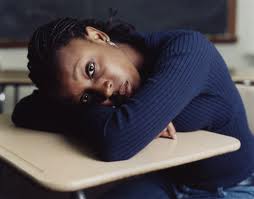
An element of Bergman's work is the lack of identity and information to the individual, but something that substitute that element is another element; the subject is identified with original, individuality in expression. Bergman is able to place himself to the same level as his subject. He is able to make his subject comfortable and at ease to be able to capture them with these introspective feelings on their faces. Their expressions are rich in the eyes, the pose, the facial features are emotional landscape to read, decipher and relate. The lack of identity and information makes the expression relatable to anyone, the feelings do not belong to just an individual, but expansive to those who wishes to engage. I like a point that Bergman made, that we must not assume that we know these individual due to their look. We tend to jump to conclusion that by being presented these individuals portraits, we know who they are. We must look past that. Bergman pointed out that, "They're the life-size faces of people most of us usually overlook, or think we have all figured out." I think sometimes, as a viewer we tend to do that, think that we have it all figured out. A portrait of someone does not mean that the artist has completely handed over the person to the viewer. The artist merely has only opened the door to the individual for the viewer.

biography:
It's part of the Bergman creed: no titles for the photographs, no identification of the subject, no information on the location. Just the year, just the close-up.

"And at first glance, Bergman's photographs may not seem that different: an emaciated man looks pensively to the side; an old woman with frizzy gray hair stares directly at the lens, directly at us. These photos all have something in common, and it seems to be the usual commentary on class.

But among these subjects, according to Bergman, "there's a housewife, there are three artists, there are two actors, an affluent owner of a bar; there's the son of a millionaire and the granddaughter of a billionaire."

Still, you can't tell who's who — and Bergman won't say. He makes a point of including very little information in his photographs: no captions, no titles, no names. He doesn't even include the scene. The photos are tightly centered around the face, and that's what makes them slightly uncomfortable: They're the life-size faces of people most of us usually overlook, or think we have all figured out."

quotes:

"It is my aesthetic stance. I don't want you to have any escape from simply reacting to the art," Bergman says, dancing slightly in his black nubuck shoes. "Telling the location sets up false assumptions. It undercuts your ability to understand and interact with the art. It subverts what I am trying to do." - Bergman

"When I first saw his photos, I was actually kind of amazed by the strength of the images and the extraordinary use of color. It's beautiful and saturated," Greenough says. "In addition, I admired his ability to put his subjects totally at ease and to capture them with these introspective feelings on their faces."

images:


review, artist & gallery link:
http://brooklynrail.org/2004/05/art/bergman
http://www.npr.org/templates/story/story.php?storyId=120283879
http://www.washingtonpost.com/wp-dyn/content/article/2009/10/12/AR2009101202981.html

Sunday, November 7, 2010

artist entry: week 11: november 08

Chad States: photography: men at their most masculine

interest and relations:
State's process in this work interest me because of his lack of specificity. Even in the proposal, State chose to intentionally state his project in a way that welcomes a wider range of subject than the project title would thought to have addressed. The lack of predictability falls on the subject's definition of masculinity as well as how the subject chooses to present it. I enjoy seeing the effect of control being given to the subject by the artist. States says "I want them to construct their identity for me, not for me to decide what I want from them. Because of this, every shoot is different, with different desires on the part of the subjects being manifested in the shooting process." I am learning to embrace the nature of unpredictability in my work as well and to make unexpected elements work. I also love seeing the subject reveal a bit of themselves to me, something else I enjoy is the surprise the subject experience learning something about themselves that they did not know of before. I want to see the honesty. It is somewhat a win-win situation for the subject and the artist, myself. The honesty that they bring to the project only only helps them to find themselves and in a way help me find myself through that.

biography:
"Men at Their Most Masculine" was a photography project Chad States began by posting "Are you masculine?" on Craiglist in search of folks who identify as masculine and why. I intentionally leave it gender-neutral so males, females and transpeople feel free to respond. The intention was to showcase a range of people who identified as masculine and photograph them on their own terms in to inspire discussion on masculinity.

One thing I did notice through the project was that masculinity was mostly seen as an innate characteristic, something the subject possessed regardless of outward appearance."

quotes:
"I am interested in using photographs to challenge definitions. I am attracted to undefined grey areas where perception can not always be trusted; areas in which the photograph proves everything and nothing simultaneously. The subjects of my investigations vary as do my methods of investigation." - Chad States

"The quotations that are the titles of the photographs come from the subjects during our initial email exchanges. If they are interested in participating in the project I ask them why they consider themselves to be masculine. I then use the resulting answers as the titles. In this way the subjects are given more of a voice and it often adds another layer to the photographs." -Chad States

images:

Liz, “When I wear men’s clothes I feel comfortable and confident in how I look on the outside which now matches the inside.”
Luke, “I am masculine because I abandon women after taking their love. Because when you study Freud, you don’t let him study you. Because I study philosophy, not literature.”

Greg, “I feel most masculine when I am lying in bed naked.”

Dex, “First off, I’d say I’m masculine because of how I feel inside, who I am, and how I carry myself. In a lot of ways my masculinity is tied to my male gender role and how I want to project that and be perceived by others.”

Mike, “I want to show that, despite stereotypes, gay men can be masculine too.”

review,
artist & gallery link:
http://www.chadstates.com/
http://www.50contemporaryart.com/gallery/2008-exhibitions-June-Chad-States

Sunday, October 31, 2010

artist entry: week 10: november 01

Clay Enos: photography: a kind of visual dialogue

interest and relations:
I am feeling the idea of meeting someone for the very first time photographing their portrait and getting them to write me a piece of their mind. I want to see how much of their self do they allow me to have, to take along with me. Will they confront the camera and let me look into their soul or will they shy away and look off into the distance? With that correlate with what they write for me? Will the ones who look straight into my "eyes", give me the most honest piece of thought? Can I read that thought through their eyes? Does it form a complete circle? I am facing my fear. I am stepping out of my comfort zone. Because to look into someone's eyes, is almost a sense of merging. A bit of me is exchanged with a bit of them. A bit of the private self is transferred, maybe?

biography:
Clay proved his eye for portraits in his first large scale photography project, Streetstudio. Launched in 2000, Streetstudio involved shooting portraits of random passersby on the streets of New York. By bringing his studio to the street he gains access to the most remarkable faces in the city. This access combined with his sheer enthusiasm and friendly rapport, allowed Clay to create quiet, poignant, portraits of everyday people that reflect the myriad beauty and electric spirit of New York City.


quotes:

"Portraits are a funny line between fiction and reality." -Enos

"
I take most of my photos with the intention to share or honor. I am always aware that my pictures will be seen by others so I try to make images that are strong and compelling. But I am also aware that the people in my pictures need to be respected. Most of my portraits are a kind of visual dialogue between me and the subject. Since those interactions are usually steeped in gratitude and curiosity, the resulting images tend to share those traits. Make sense?" -Enos

images:


review, artist & gallery link:
http://www.clayenos.com/index.html

http://claystation.clayenos.com/
http://blog.clayenos.com/

Monday, October 25, 2010

artist entry: week 09: october 25

Dawoud Bey: photography: products of the attitude

interest and relations:
I believe a valuable piece of information while looking at Bey's work was what he said about the environment in his images, "Because that is the place in which they spend a significant amount of their time. I wanted to have that aspect of their experience represented in the construct of the pictures, even if what the text revealed was outside of that experience". I feel that this is the reason I am photographing the way I am. I am capturing people in the place where they are most comfortable, juxtapose that to the act of being monitored which might be uncomfortable, and then have my subject write about that moment, write about the experience. So as a final product, I have the physical aspect of the person captured, but I also have a piece of their mental and emotional state of mind. I feel it is important to look inward and be reflexive. We sometimes forget to look inward and be conscious. Sometimes, we run on autopilot and numb our feelings and our thoughts and just let the days run together.

biography:
"A product of the 1960s, Dawoud Bey said both he and his work are products of the attitude, “if you’re not part of the solution, you’re part of the problem.”² This philosophy significantly influenced his artistic practice and resulted in a way of working that is both community-focused and collaborative in nature. Bey’s earliest photographs, in the style of street photography, evolved into a five-year project documenting the everyday life and people of Harlem in Harlem USA (1975–1979)."

"Bey is interested in the portrait as a site of psychological and emotional engagement between the photographer and his model. The multiple panels of Bey’s signature style, evident in this 1993 Polaroid triptych, allow him to capture momentary changes in expression, fleeting gestures, and the subtle articulations of personality."

quotes:
“My interest in young people has to do with the fact that they are the arbiters of style in the community; their appearance speaks most strongly of how a community of people defines themselves at a particular historical moment.” -Dawoud Bey

"Because that is the place in which they spend a significant amount of their time. I wanted to have that aspect of their experience represented in the construct of the pictures, even if what the text revealed was outside of that experience. Visually, I wanted to situate them in the context of the space but not have that space dominate or even be equally as present as they are on the photographs, which is why they are more optically foregrounded." - Dawoud Bey

images:


review, artist & gallery link:
http://www.dawoudbey.net/
http://whatsgoingon-dawoudbeysblog.blogspot.com/

http://www.youtube.com/watch?v=mFX0ti0fTUs&feature=player_embedded#!